
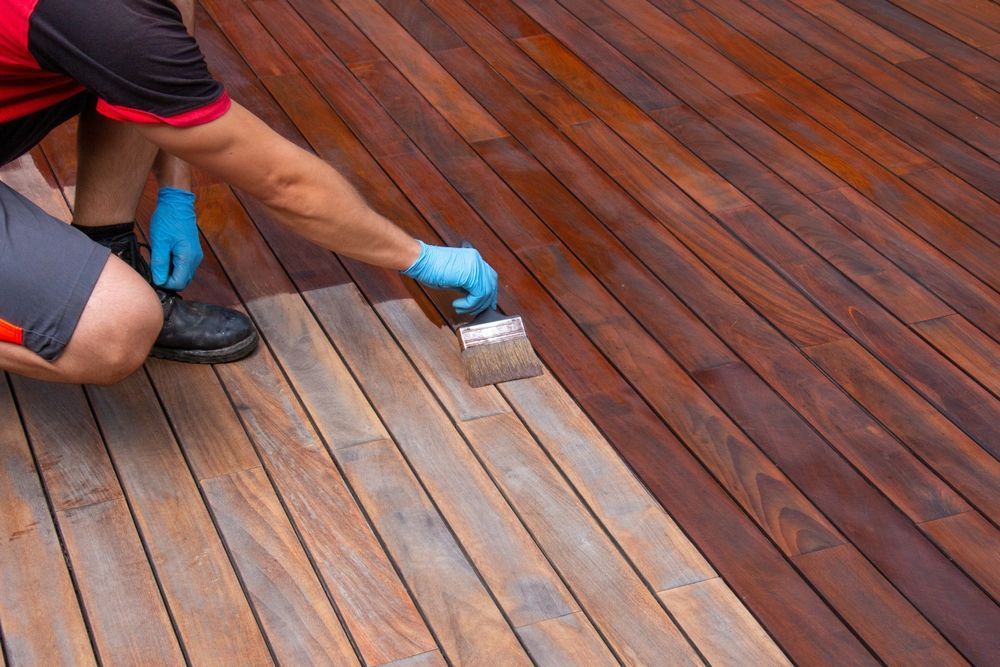
Deck, Trim, and Wood Staining in Stanton, MI
Staining in Stanton, MI is one of the best ways to protect and highlight natural wood, but only when the wood is prepared correctly and the stain suits the surface. Mid-Michigan decks and fences endure snow, ice, spring rain, and strong summer UV exposure, while interior trim and cabinets need an even, blotch-free finish. Renovations Done Wright LLC
provides interior and exterior staining that starts with proper sanding, cleaning, and stain selection so the color penetrates evenly and the wood stays protected through every season.
Schedule Your Staining Estimate in Stanton, MI With Renovations Done Wright LLC
Exterior Staining for Decks, Fences, and Siding
Exterior staining protects wood from moisture, sun damage, and freeze-thaw cycles that cause cracking and rot.
Deck Staining
Decks take heavy abuse from foot traffic, standing water, and melting snow. Deck staining begins with cleaning, removing failed coatings, and brightening the wood so the new stain can absorb into the grain instead of sitting on the surface.
Fence Staining
Fences are exposed on both sides and often sit close to soil and sprinklers. Staining fences with a penetrating exterior stain slows graying, reduces warping, and extends the life of the boards.
Cedar and Log Siding Staining
Cedar siding, shakes, and log homes benefit from staining products designed for exterior vertical surfaces. Regular staining maintenance helps prevent checking, mildew growth, and UV breakdown of the wood fibers.
Porches, Pergolas, and Outdoor Structures
Porches, pergolas, gazebos, and railings receive the same preparation and staining approach so every outdoor structure matches and stays protected.
Interior Staining for Trim, Doors, and Cabinets
Interior staining brings out the warmth of natural wood and gives rooms a finished, cohesive look.
Trim and Baseboard Staining
Stained trim, casing, and baseboards are sanded smooth and treated with pre-stain conditioner when needed to avoid blotching. A clear protective topcoat is applied to seal the stain.
Door Staining
Interior and exterior wood doors are stained with attention to panels, edges, and end grain. Exterior doors receive UV-resistant topcoats to handle direct sunlight.
Cabinet Staining and Restaining
Cabinet staining can update color or refresh a worn finish. Existing finishes are cleaned and sanded, and restaining is matched to the wood species for consistent results.
Stair Rails and Wood Features
Handrails, balusters, mantels, and built-ins are stained by hand so detailed profiles receive full, even coverage.
Choosing the Right Stain for Each Surface
Stain products vary widely, and the right choice depends on the wood, the location, and the look you want.
Transparent and Semi-Transparent Stains
Transparent and semi-transparent staining shows the most natural grain. These are popular for newer decks and cedar surfaces in good condition.
Solid Color Stains
Solid stain hides more of the grain and covers weathered or mismatched boards. It offers strong UV protection but can peel on horizontal surfaces if applied too heavily.
Oil-Based Versus Water-Based Stains
Oil-based staining products penetrate deeply and enrich the grain, while water-based stains dry faster and resist mildew. Each has advantages depending on the surface and conditions.
Gel Stains
Gel stain sits closer to the surface and is useful for fiberglass doors, veneers, and woods that tend to blotch.
Wood Preparation Before Staining
Preparation determines how evenly and how long the staining lasts.
Cleaning and Stripping
Dirt, mildew, and old coatings are removed with cleaners or strippers. Failed stain must come off, or the new coat will not bond properly.
Sanding and Brightening
Sanding opens the grain and smooths raised fibers. Wood brighteners restore the natural pH after stripping and help exterior stain absorb evenly.
Moisture Testing
Wood must be dry before staining. Newly pressure-treated lumber often needs time to dry out before it will accept stain.
Staining Maintenance and Timing in Mid-Michigan
Staining schedules in Stanton and the surrounding Montcalm County area are shaped by the weather.
Best Season for Exterior Staining
Exterior staining is best done from late spring through early fall, when temperatures stay above about 50°F and no rain is expected for at least 24 hours.
How Often to Restain
Horizontal deck surfaces typically need restaining every two to three years, while vertical surfaces such as fences and siding often last three to five years or longer.
Request a Staining Quote From Renovations Done Wright LLC
in Stanton, MI
Frequently Asked Questions About Staining in Stanton, MI
How much does deck staining cost in Stanton, MI?
Deck staining cost depends on deck size, condition, railing detail, and whether old stain must be stripped. A deck in good condition costs less to stain than one needing full stripping and sanding.
How often should a deck be stained in Michigan?
Most decks in Michigan need restaining every two to three years. Decks with full sun exposure or heavy traffic may need staining more often.
Is it better to stain or paint a deck?
Staining is usually better for decks because it penetrates the wood and wears gradually instead of peeling. Paint forms a film that can trap moisture and flake on horizontal surfaces.
How long should new pressure-treated wood dry before staining?
New pressure-treated lumber often needs several weeks to a few months to dry before staining. A simple water drop test shows readiness: if water soaks in, the wood is ready.
Can you stain over old stain?
Staining over old stain works if the existing finish is similar in type and still well bonded. Failing or peeling stain must be removed first.
What is the difference between semi-transparent and solid stain?
Semi-transparent staining shows the wood grain while adding color, and solid stain covers the grain similar to paint while still allowing the wood texture to show.
Why does stain look blotchy on some wood?
Softwoods like pine and some hardwoods like maple absorb stain unevenly. A pre-stain wood conditioner or gel stain helps produce more even staining results.
How long does stain take to dry?
Most stains dry to the touch within a few hours, but exterior surfaces should stay free of foot traffic for 24 to 48 hours. Oil-based products generally take longer.
Can cabinets be stained a darker color?
Cabinets can be restained darker after cleaning and sanding. Going lighter usually requires stripping to bare wood.
What temperature is too cold for exterior staining?
Most exterior stains should not be applied below about 50°F. Cold temperatures slow curing and can cause poor penetration.
Do I need to seal wood after staining?
Many exterior stains include built-in sealers. Interior staining usually requires a separate clear topcoat such as polyurethane for protection.